
What's New:
- A new aproach to learning from hints. Here is the draft paper about the technique, and here is an 18-minute video segment explaining it.
- The US patent for the blood clot detection method has been issued.
- Our non-invasive method for measuring true Blood Pressure was featured in the IEEE Spectrum, in several news articles, and in a Caltech article. The peer-reviewed paper appears in PNAS Nexus and US patent # 11,950,887 for the method has been issued.
Popular Items:
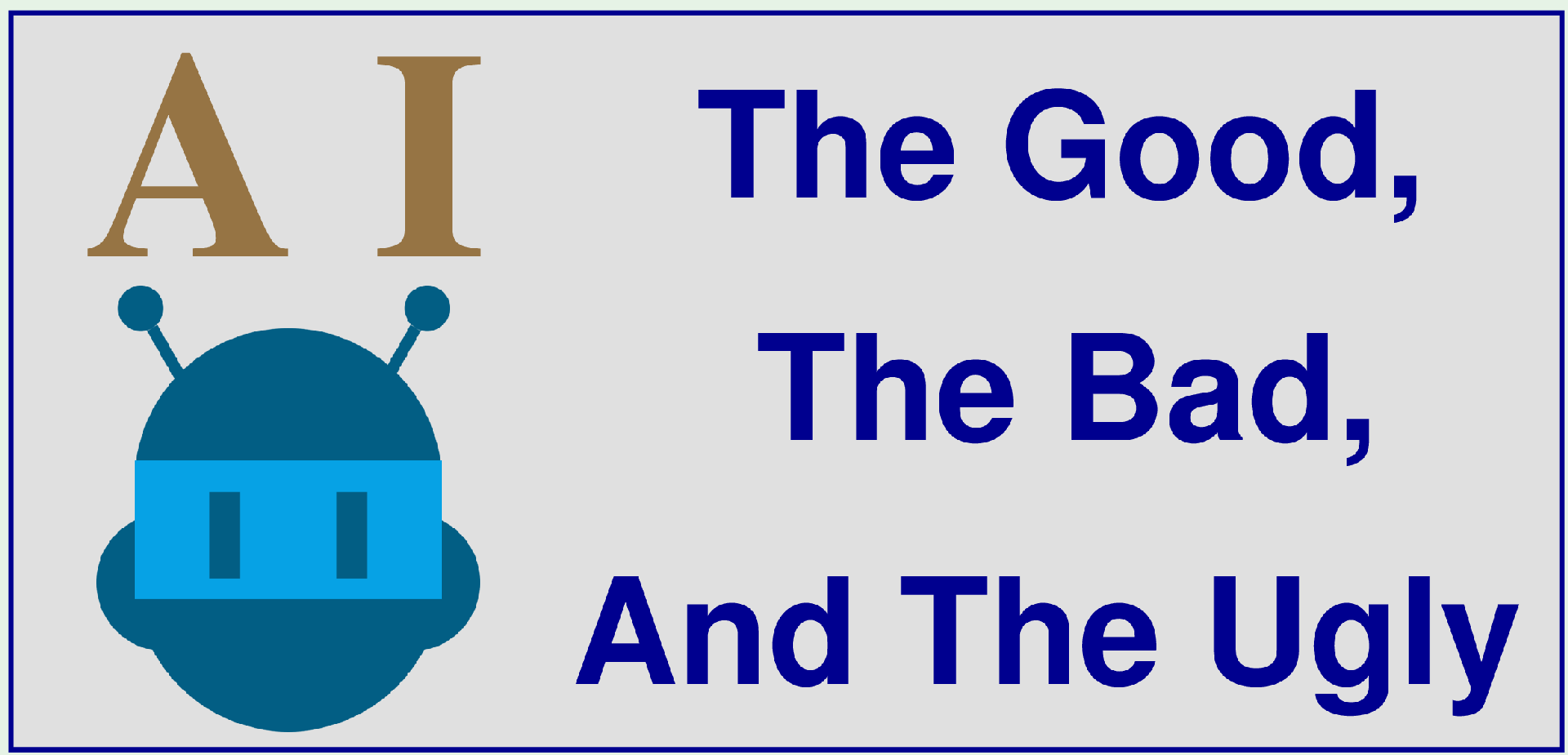
- The most watched Watson Lecture of the centennial season is Professor Abu-Mostafa's public talk on "Artificial Intelligence: The Good, The Bad, And The Ugly".
- The textbook Learning from Data is one of Amazon's bestsellers in Machine Learning, and was Amazon's #1 in all categories of Computer Science repeatedly.
- The online course (MOOC) on Machine Learning has attracted more than 8 million views on YouTube and other servers since its launch as Caltech's first-ever live broadcast of a course.
Sample Articles:
Welcome!
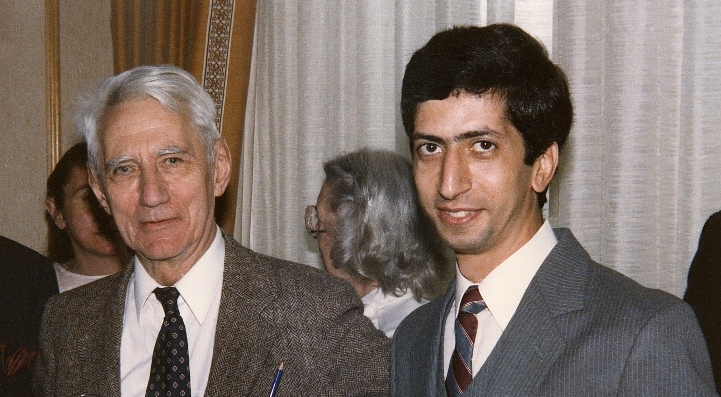
Yaser S. Abu-Mostafa is Professor of Electrical Engineering and Computer Science at the California Institute of Technology, Chairman of Machine Learning Consultants LLC, and co-founder of Esperto Medical, Inc. His main fields of expertise are Artificial Intelligence, Machine Learning, medical applications of AI, and Computational Finance. He is the author of Amazon's machine learning bestseller Learning from Data. His MOOC on machine learning has attracted more than eight million views.
Dr. Abu-Mostafa received the Clauser Prize for the most original doctoral thesis at Caltech. He received the ASCIT Teaching Awards in 1986, 1989 and 1991, the GSC Teaching Awards in 1995 and 2002, and the Richard P. Feynman prize for excellence in teaching in 1996. He was the founding Program Chairman of the annual conference on Neural Information Processing Systems (NIPS/NeurIPS), and a founding member of the IEEE Neural Networks Council. He chaired the second and fourth international conferences on Neural Networks in the Capital Markets (NNCM-94 and NNCM-96), and the sixth international conference on Computational Finance (CF-99). In 2005, the Hertz Foundation established a perpetual graduate fellowship named the Abu-Mostafa Fellowship in his honor.
Dr. Abu-Mostafa currently serves on a number of scientific advisory boards, and has served as a technical consultant on machine learning for several companies, including Citibank for 9 years. He has numerous technical publications including 3 articles in Scientific American, several keynote lectures at international conferences, and 10 patents in AI and Medicine.
My Research Areas
- Artificial Intelligence
- Machine Learning
- Medical applications of AI
- Computational Finance